Kot Diji Fort: A Timeless Fortress Preserving the History of Sindh
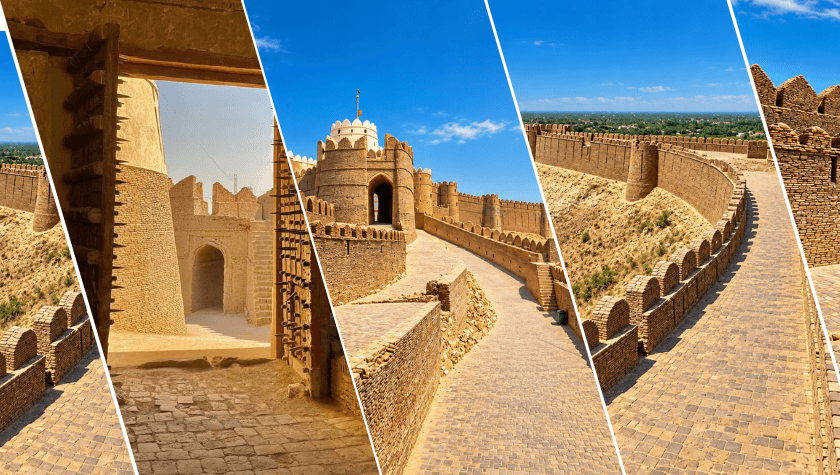
Kot Diji Fort, standing proudly on a rocky hill in Sindh, is one of them. Its towering brick walls, narrow gateways, and impressive defensive structures tell the story of a time when powerful rulers built fortresses to protect their kingdoms.
Located in the Khairpur District of Pakistan, this remarkable fort has watched over the surrounding landscape for more than two centuries. Despite the passage of time, much of its original character remains visible.
What makes Kot Diji particularly fascinating is that its history reaches far beyond the fort itself. Nearby archaeological remains reveal traces of an ancient civilization that existed thousands of years before the Talpur rulers built their stronghold.
For history lovers, photographers, and travellers searching for unique places to visit in Sindh, Kot Diji Fort offers something different from the usual tourist attractions.
Let's explore its history, architecture, location, and the details worth knowing before planning a visit.
Where Is Kot Diji Fort Located?
Kot Diji Fort is located in Kot Diji town, approximately 25 kilometres from Khairpur city in Sindh, Pakistan. It stands on a limestone hill at the southern end of the Rohri Hills, overlooking the surrounding plains.
The fort's elevated location is one of its most recognizable features. From a distance, its long defensive walls appear to rise naturally from the rocky landscape.
Unlike monuments situated within busy city centres, Kot Diji retains a quieter atmosphere, surrounded by small settlements and agricultural land.
Its location also makes it a convenient destination for travellers exploring Khairpur and the wider upper Sindh region.
Kot Diji Fort at a Glance
Historical name: Fort Ahmadabad
Location: Kot Diji, Khairpur District, Sindh
Built by: Mir Sohrab Khan Talpur
Construction period: Approximately 1785–1795
Historical period: Talpur dynasty
Main material: Kiln-baked bricks
Hill height: Approximately 110 feet
Notable features: Three gateways, fortified walls, bastions
Best visiting season: November to February
History of Kot Diji Fort: A Legacy of the Talpur Dynasty
The history of Kot Diji Fort begins in the late eighteenth century, when political power in Sindh was undergoing significant changes.
The Talpur dynasty came to power in 1783, replacing the Kalhora rulers. During this period, different branches of the Talpur family controlled various parts of Sindh.
One prominent ruler was Mir Sohrab Khan Talpur, who established his authority over the Khairpur region.
Recognizing the importance of protecting his territory, he ordered the construction of a powerful fortress at Kot Diji.
Who Built Kot Diji Fort?
Mir Sohrab Khan Talpur commissioned the fort during the late eighteenth century. Its construction is generally dated between 1785 and 1795, although some historical references give slightly different completion dates.
The fortress was originally known as Qila-e-Ahmadabad, or Fort Ahmadabad.
Rather than building an elaborate royal palace, Mir Sohrab focused on developing a military stronghold capable of defending the surrounding region.
The fort's hilltop location allowed soldiers to monitor movement across the plains and identify potential threats from a distance.
Its massive walls and carefully controlled entrances made approaching the stronghold difficult.
Why Was Kot Diji Fort Built?
Kot Diji Fort was primarily constructed for defense.
During the Talpur period, territorial security was essential for maintaining political control. Fortified positions helped rulers protect important settlements, military resources, and communication routes.
Mir Sohrab Khan developed several defensive fortifications across his territory, with Kot Diji becoming one of the most significant.
The fortress also represented the growing power of the Talpur rulers in upper Sindh.
Although the region later came under British influence, Kot Diji remained an important architectural reminder of the Talpur era.
The Remarkable Architecture of Kot Diji Fort
One of the most impressive aspects of Kot Diji Fort in Khairpur is its military architecture.
Unlike palaces decorated mainly for beauty and comfort, this fortress was designed with survival and security in mind.
Nearly every major feature served a defensive purpose.
Massive Brick Walls and Strategic Design
The fort occupies a long, narrow limestone hill approximately 110 feet above the surrounding terrain.
Its walls rise around 30 feet in places, creating an imposing barrier along the ridge.
One interesting detail is the choice of building material.
Instead of relying entirely on local limestone, the builders used kiln-baked bricks, which were considered more suitable for constructing strong defensive walls.
The fort's perimeter extends approximately 1.8 kilometres, following the natural shape of the hill.
This combination of terrain and engineering made the fortress especially difficult to approach.
Three Strong Defensive Gateways
The entrance system is among the fort's most fascinating features.
Visitors approach through three gateways positioned along an ascending route.
Rather than offering a simple straight entrance, the pathway changes direction, making it harder for attackers to advance quickly.
The original main entrance featured a heavy wooden door reinforced with iron spikes.
These defensive details reveal how carefully the fortress was planned.
The final gateway, traditionally called Shahi Darwaza, leads into the main fortified area.
Walking through the entrance sequence is one of the best ways to appreciate the thinking behind the design.
Bastions, Watchtowers, and Military Structures
Kot Diji Fort contains approximately 50 bastions positioned around its defensive walls.
These projecting structures provided vantage points for guards and locations for cannons.
Within the fortress were spaces associated with soldiers, storage, administration, and the ruler's household.
Historical descriptions also mention a court pavilion and vaulted chambers.
Today, the surviving structures allow visitors to imagine how the fortress once functioned as a military center.
What Makes Kot Diji Fort Historically Unique?
There are many forts across Pakistan, but Kot Diji has an especially interesting connection with the country's ancient past.
The area surrounding the fortress contains archaeological remains associated with the pre-Harappan period of the Indus Valley Civilization.
This means the region was inhabited long before the Talpur dynasty existed.
The Ancient Kot Diji Archaeological Site
Near the fort lies the famous Kot Diji archaeological mound, also known as Diji Ji Takri.
Archaeological investigations carried out during the 1950s revealed evidence of an early settled community.
Researchers discovered pottery, mud-brick structures, and traces of organized settlement dating back thousands of years.
These findings helped archaeologists understand the cultural developments that preceded the mature urban civilization of Harappa and Mohenjo-daro.
The early cultural phase associated with these discoveries became known as the Kot Diji culture.
A Place Connecting Two Different Eras
What makes this location extraordinary is the contrast between its historical periods.
The archaeological mound represents prehistoric settlement and early cultural development.
The nearby hilltop fortress represents the political and military ambitions of the eighteenth-century Talpur rulers.
Together, they offer a fascinating look at how the same region remained historically significant across very different periods.
For travellers interested in archaeology, this connection provides an additional reason to explore Kot Diji.
What to See Inside Kot Diji Fort
Exploring Kot Diji Fort is less about finding luxurious interiors and more about discovering the remains of a carefully designed defensive complex.
The experience begins with the climb toward the entrance and continues through narrow passages, gateways, and open sections overlooking the countryside.
Explore the Historic Gateways
Take time to observe the entrances and the way they connect with the surrounding walls.
The route was deliberately designed to restrict movement, giving defenders an advantage over anyone attempting to enter by force.
The shape of the gateways, thickness of the walls, and remaining architectural details are particularly interesting for history enthusiasts.
Walk Along the Fortified Areas
Where public access is permitted, the elevated sections of the fort offer views of the surrounding plains.
From these positions, it becomes easier to understand why the Talpur rulers selected this hill.
The landscape stretches beyond the settlement, giving a sense of how guards could monitor approaching movement.
However, some sections may be uneven, fragile, or restricted. Avoid climbing damaged walls or entering unstable structures.
Discover the Remains of Royal and Military Buildings
Inside the fortress, visitors can observe the remains of chambers and structures associated with its former occupants.
These spaces provide clues about everyday life within a military stronghold.
Although some buildings have deteriorated, the surviving architecture still communicates the fort's original defensive character.
For anyone interested in historical architecture in Pakistan, these features make the visit worthwhile.
Best Time to Visit Kot Diji Fort
The best time to visit Kot Diji Fort is generally between November and February, when the weather in upper Sindh is more suitable for outdoor exploration.
Summers in this region can be extremely hot, and the exposed hilltop offers limited protection from direct sunlight.
During winter, visitors can explore the fortress more comfortably without the intense heat.
Morning or Evening: Which Is Better?
Early morning is usually the most practical time to visit.
The temperatures are generally cooler, and softer sunlight highlights the textures of the old brick walls.
Late afternoon can also provide attractive conditions for photography, although visitors should confirm closing arrangements and allow enough time to descend safely.
Avoid exploring the fort during the hottest part of the day, especially in summer.
How to Reach Kot Diji Fort
Reaching Kot Diji Fort in Sindh is relatively straightforward once you arrive in Khairpur.
Travelling from Khairpur
Khairpur is the most convenient starting point.
The fort is approximately 25 kilometers away, and travelers can arrange a taxi or private vehicle for the journey.
Depending on road conditions and your starting point, the drive may take around 30–45 minutes.
A local driver familiar with the route can make the trip easier.
Travelling from Sukkur
Visitors travelling from Sukkur can reach the Khairpur region by road before continuing toward Kot Diji.
This makes the fort a suitable excursion for travellers staying in Sukkur or exploring upper Sindh.
Arrange your return transportation in advance rather than relying on finding a vehicle near the fort.
Travelling from Karachi
For travellers coming from Karachi, Kot Diji is best included in a longer Sindh Road trip.
The journey involves several hours of driving, so an overnight stay in Khairpur or Sukkur is often more comfortable than attempting a rushed visit.
Check road conditions and allow flexibility in your schedule.
Photography at Kot Diji Fort
For photographers, Kot Diji Fort offers excellent opportunities to capture traditional military architecture against a dramatic natural setting.
The warm colour of its brick walls contrasts beautifully with the rocky hill and open sky.
Some of the most interesting photographic subjects include:
The fortress rising above the surrounding landscape.
The curved defensive walls and rounded bastions.
The historic gateways and narrow passageways.
Architectural details in the original brickwork.
Panoramic views from safe, accessible elevated sections.
Early morning light is especially useful for capturing the fort's textures.
Before using drones or professional photography equipment, confirm whether special permission is required.
Travel Tips Before Visiting Kot Diji Fort
A little preparation can make exploring this historic landmark much easier.
Wear comfortable shoes: Some walking surfaces may be steep, rocky, or uneven.
Carry drinking water: The exposed location can become hot even outside summer.
Bring sun protection: A hat and sunscreen are helpful.
Respect restricted areas: Avoid climbing damaged walls or entering unsafe chambers.
Confirm opening arrangements: Visitor access and admission policies may change.
Travel during daylight: The hilltop is easier to navigate in good visibility.
Keep the site clean: Avoid leaving rubbish or damaging historical structures.
Allow approximately one to two hours to explore the fortress at a relaxed pace.
Visitors particularly interested in photography or architecture may prefer additional time.
Why Preserving Kot Diji Fort Matters
Kot Diji Fort is not simply an old building. It is physical evidence of Sindh's political history, traditional construction methods, and military planning.
Unfortunately, historic structures are vulnerable to weathering, inappropriate development, and damage caused by human activity.
Conservation is important because lost architectural features cannot easily be replaced.
Protecting the fortress also helps future generations understand the Talpur dynasty and its role in shaping the Khairpur region.
In March 2026, Pakistan submitted Kot Diji Fort to UNESCO's World Heritage Tentative List, drawing further attention to its cultural significance.
Although this does not make it a designated World Heritage Site, it represents an important step toward international recognition.
Responsible tourism can support preservation by encouraging public appreciation without placing unnecessary pressure on fragile structures.
Is Kot Diji Fort Worth Visiting?
If you enjoy historical sites, architecture, and discovering lesser-known destinations, Kot Diji Fort is well worth visiting.
Its appeal is different from that of a restored palace or a modern tourist attraction.
Here, the experience comes from walking through old defensive gateways, observing centuries-old brickwork, and understanding how the landscape influenced military design.
The nearby archaeological history adds another layer of interest.
Rather than treating Kot Diji as a quick photo stop, take time to appreciate the stories preserved within its walls.
For travellers exploring tourist attractions in Khairpur, the fortress remains one of the area's most meaningful historical landmarks.
FAQs About Kot Diji Fort
1. Who built Kot Diji Fort and when?
Kot Diji Fort was commissioned by Mir Sohrab Khan Talpur during the late eighteenth century. Its construction is commonly dated between 1785 and 1795.
2. What was the original name of Kot Diji Fort?
The fortress was originally known as Fort Ahmadabad or Qila-e-Ahmadabad. Today, it is commonly called Kot Diji Fort after the nearby town.
3. Is Kot Diji Fort part of the Indus Valley Civilization?
The existing fortress belongs to the eighteenth-century Talpur period. However, the nearby Kot Diji archaeological site contains much older remains associated with a pre-Harappan culture.
4. Is Kot Diji Fort a UNESCO World Heritage Site?
Kot Diji Fort was added to Pakistan's UNESCO World Heritage Tentative List in March 2026. It has not yet been inscribed on the official World Heritage List.
5. Are there entrance fees for Kot Diji Fort?
Entrance charges and visiting arrangements may change. Travelers should confirm current fees, opening hours, and access conditions with local tourism or heritage authorities before visiting.
6. Can families and children visit Kot Diji Fort?
Families can plan a visit, provided access is permitted and appropriate precautions are taken. Children should remain supervised because some sections involve steep slopes and uneven surfaces.
Final Thoughts
Kot Diji Fort is one of those historical places that deserves more attention from travellers exploring Pakistan.
Its imposing brick walls, impressive gateways, and hilltop position reveal the skill and strategic thinking of the Talpur rulers who built it.
But the surrounding region offers an even larger historical story, connecting the eighteenth-century fortress with traces of prehistoric settlement.
Whether you are interested in photography, archaeology, architecture, or cultural tourism, Kot Diji provides an opportunity to discover a fascinating part of Sindh's heritage.
Related Blogs
- UNESCO World Heritage Sites of Pakistan
- Top 6 Best Parks In Karachi For Family Outing
- Top 5 Most Famous Sufi Shrines In Pakistan
- Top 10 Most Beautiful Lakes In Pakistan
- Top 10 Famous Historical Forts In Pakistan
- Pakistan Maritime Museum Karachi Complete Guide
- Discovering the Most Popular Cultural Festivals In Pakistan
- Discover the Enigmatic Thatta: The Ancient City of Pakistan