Shrine of Sachal Sarmast: A Beautiful Symbol of Sufi Heritage in Sindh
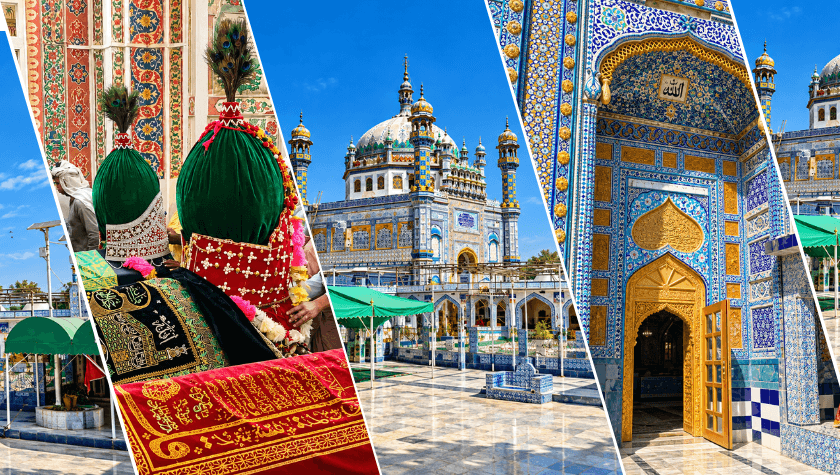
There are places in Pakistan where history is preserved in old buildings, and others where it continues to live through poetry, music, and devotion. The Shrine of Sachal Sarmast, nestled in the village of Daraza Sharif in Sindh, brings all these elements together.
With its colourful tilework, magnificent dome, and peaceful spiritual atmosphere, the shrine is much more than a historical monument. It is a place where people gather to remember one of Sindh's most celebrated Sufi poets, whose message of love, humanity, and tolerance remains meaningful today.
Unlike the grand forts and palaces found across Pakistan, this sacred destination has a different kind of charm. Here, visitors encounter centuries-old Sufi traditions that continue to shape the cultural identity of Sindh.
Whether you enjoy discovering historical landmarks, exploring regional architecture, or learning about spiritual traditions, Sachal Sarmast Shrine in Khairpur offers a memorable cultural experience.
Where Is the Shrine of Sachal Sarmast Located?
The Shrine of Sachal Sarmast is located in Daraza Sharif, near Ranipur and Gambat in Khairpur District, Sindh, Pakistan. It lies approximately 40 kilometres southwest of Khairpur city.
Daraza Sharif is a small settlement that has become an important religious and cultural destination because of its association with the famous Sufi poet.
The shrine is accessible through roads connecting the area with the N-5 National Highway and the Gambat-Ranipur region.
Although the village may appear modest compared with Pakistan's larger tourist destinations, its spiritual importance attracts pilgrims, researchers, and travellers interested in Sindhi heritage.
Shrine of Sachal Sarmast at a Glance
Location: Daraza Sharif, Khairpur, Sindh
Famous personality: Sachal Sarmast
Original name: Abdul Wahab Farooqi
Born in1739
Died: Commonly recorded as 1827
Known for: Sufi poetry and spiritual philosophy
Famous title: Shair-e-Haft Zaban
Architectural features: Dome, minarets, colorful tilework
Annual Urs: 13–15 Ramadan
Best visiting months: November to February
Who Was Sachal Sarmast?
To understand the importance of the shrine, it helps to know the extraordinary person buried here.
Sachal Sarmast, whose original name was Abdul Wahab Farooqi, was born in 1739 in Daraza, Sindh. He became one of the region's most influential Sufi poets and spiritual thinkers.
His life unfolded during a period when Sindh experienced important political and cultural changes under the Kalhora and Talpur rulers.
Rather than seeking worldly power, Sachal dedicated much of his life to spiritual reflection, poetry, and the exploration of divine love.
His writings encouraged people to look beyond outward differences and recognize the deeper connections between human beings.
Why Was He Called Sachal Sarmast?
The name Sachal Sarmast reflects his personality and spiritual beliefs.
Sachal is associated with truthfulness, while Sarmast refers to someone absorbed in spiritual ecstasy.
Together, the name is commonly understood as a person devoted to truth and divine love.
His followers also remember him as Shair-e-Haft Zaban, meaning the Poet of Seven Languages.
Sachal composed poetry in several languages, most prominently Sindhi and Saraiki, while Persian also played an important role in his literary work.
His ability to express spiritual ideas through different languages helped his message reach diverse communities.
The History of the Shrine of Sachal Sarmast
The history of the Shrine of Sachal Sarmast is closely connected with the poet's life and the cultural development of Khairpur.
After his death, traditionally commemorated on the 14th of Ramadan, Sachal was buried in his ancestral village of Daraza.
Historical references vary slightly on his year of death, although 1827 is commonly accepted.
Over time, his burial place became a gathering point for followers who admired his poetry and spiritual teachings.
Construction During the Talpur Period
The mausoleum is traditionally associated with Mir Rustam Khan Talpur, a ruler of Khairpur.
The Talpur dynasty governed the region during the late eighteenth and nineteenth centuries and contributed significantly to Sindh's architectural heritage.
The construction of a permanent tomb helped preserve Sachal's burial place and provided a setting for religious gatherings.
Later renovations introduced additional decorative elements, including the colourful tiles that make the shrine recognizable today.
As generations passed, Daraza Sharif developed into an important centre of Sufi remembrance.
Architecture of the Shrine of Sachal Sarmast
One of the first things visitors notice about the shrine is its beautiful combination of colours, patterns, and traditional architectural forms.
The building reflects artistic traditions associated with Sindh, where decorative tilework has long been an important feature of religious monuments.
Colourful Kashi Tiles and Decorative Patterns
The shrine's exterior features striking blue, white, and yellow glazed tiles, commonly associated with Sindhi Kashi craftsmanship.
These tiles display geometric designs, floral patterns, and decorative inscriptions.
The intricate craftsmanship adds depth and colour to the walls, particularly when sunlight falls across the surface.
For visitors interested in traditional art, the tilework alone makes the shrine worth exploring.
The Dome and Minarets
The main tomb is built around a square chamber crowned by a dome.
The historic structure is constructed from fired bricks and lime mortar, with substantial walls providing support.
Four corner features frame the original tomb, while ornamental towers and decorative elements contribute to the appearance of the larger shrine complex.
Inside the mausoleum, Sachal's grave is accompanied by other family burials.
The overall design combines architectural beauty with the practical requirements of a sacred gathering place.
Sachal Sarmast's Message of Love and Humanity
The spiritual importance of the shrine comes from the philosophy of the poet himself.
Sachal Sarmast is closely associated with Wahdat-ul-Wujud, often translated as the unity of existence.
This Sufi philosophical tradition emphasizes the relationship between divine reality and creation.
Through his poetry, Sachal explored themes of spiritual awakening, self-knowledge, devotion, and love.
A Voice Against Social Division
One of the most remarkable aspects of Sachal's poetry is its emphasis on looking beyond religious and social divisions.
His writings encouraged followers to value compassion rather than judge people entirely through labels or outward appearances.
This approach contributed to his reputation as an important voice for spiritual openness in Sindh.
His influence extended beyond one religious community, and his teachings remain part of the region's shared cultural heritage.
The Role of Poetry and Music
Sachal's verses continue to be performed by traditional Sindhi singers and Sufi musicians.
His poetry is especially associated with the kafi, a lyrical form commonly used to express mystical ideas and feelings of devotion.
At Daraza Sharif, musicians known as Darazi faqirs have helped preserve this tradition through performances of his poetry.
For cultural travelers, these musical traditions offer insight into the continuing relationship between literature, spirituality, and everyday life in Sindh.
The Annual Urs of Sachal Sarmast
One of the most important occasions at Daraza Sharif is the annual Urs of Sachal Sarmast.
An Urs is a Sufi commemoration of a saint's death anniversary, often understood within the tradition as a spiritual reunion with the divine.
The celebrations usually take place over three days, from the 13th to the 15th of Ramadan.
During this period, Daraza Sharif becomes a centre of religious and cultural activity.
What Happens During the Urs?
The commemorations may include:
Recitations of Sachal Sarmast's poetry.
Sufi musical gatherings known as Mehfil-e-Sama.
Prayers and floral tributes at the tomb.
Literary conferences and poetry gatherings.
Cultural activities celebrating Sindhi traditions.
Visitors arriving during the Urs can encounter a particularly vibrant expression of Sindh's Sufi heritage.
However, the celebrations also attract large crowds, and additional security arrangements may affect access to the shrine.
What to Expect When Visiting the Shrine
A visit to the Shrine of Sachal Sarmast in Daraza Sharif is different from sightseeing at an ordinary historical attraction.
The complex remains an active place of devotion, so visitors should approach it respectfully.
As you enter the grounds, the colourful architecture immediately draws attention. The details around the entrances, walls, and dome offer many opportunities to appreciate traditional craftsmanship.
Inside permitted areas, visitors may offer prayers, reflect quietly, or observe local devotional customs.
Depending on the day and ongoing activities, there may also be opportunities to hear traditional recitations or music associated with Sachal's poetry.
The experience is most rewarding when visitors take time to understand the significance of the shrine rather than treating it simply as a photography location.
Best Time to Visit the Shrine of Sachal Sarmast
The best time to visit is generally between November and February, when temperatures in Sindh are more comfortable for outdoor travel.
During summer, the Khairpur region can experience extreme heat, making long journeys and sightseeing tiring.
Early mornings are particularly suitable for exploring the shrine and surrounding village.
Travelers interested in religious and cultural gatherings may prefer visiting during the annual Urs, provided they are comfortable with crowds.
For a quieter visit, choose an ordinary weekday outside major commemorative periods.
How to Reach the Shrine of Sachal Sarmast
Reaching Daraza Sharif is relatively convenient once you arrive in the Khairpur region.
From Khairpur
Khairpur city is approximately 40 kilometres from the shrine.
Travelers can arrange a private car or taxi, with journey times varying according to road conditions and the route taken.
From Sukkur
Visitors staying in Sukkur can travel toward Khairpur and continue toward the Gambat-Ranipur area.
A private vehicle is usually the most flexible option, especially when planning to visit multiple attractions.
From Karachi
Travelers coming from Karachi can reach the region by road using the main highway network.
Because the journey is lengthy, consider staying overnight in Khairpur or Sukkur rather than attempting an exhausting same-day return.
Before departure, confirm road conditions, shrine access, and available transportation.
Nearby Attractions Worth Exploring
A trip to Daraza Sharif can easily become part of a wider journey through Sindh's cultural and historical landmarks.
Kot Diji Fort
Located in Khairpur District, Kot Diji Fort is an impressive hilltop fortress associated with the Talpur dynasty.
Its massive defensive walls, gateways, and historic brick structures offer an interesting contrast to the spiritual atmosphere of Sachal Sarmast's shrine.
Faiz Mahal
Faiz Mahal, situated in Khairpur, is another important historical attraction.
Built during the Talpur period, the palace is admired for its architecture and royal history.
Access arrangements should be checked beforehand because parts of the property may not be open to casual visitors.
Essential Travel Tips
Before visiting the Shrine of Sachal Sarmast, keep these practical recommendations in mind.
Dress modestly: Wear respectful clothing suitable for a religious site.
Remove footwear: Follow the shrine's instructions before entering sacred areas.
Respect worshippers: Avoid disturbing people offering prayers.
Ask before photographing: Restrictions may apply inside the tomb or during ceremonies.
Carry drinking water: Upper Sindh can be hot even outside summer.
Check visiting arrangements: Opening times and security procedures can change.
Plan transportation: Confirm your return journey, particularly if traveling from another city.
Allow approximately one to two hours for a relaxed visit, depending on crowds and permitted access.
Why the Shrine of Sachal Sarmast Is Worth Visiting
For travellers who enjoy meaningful cultural experiences, the Shrine of Sachal Sarmast offers much more than attractive architecture.
It is a place where poetry continues to influence spiritual practice, traditional music preserves literary heritage, and local communities maintain a connection with their past.
The colourful tilework reflects Sindh's artistic identity, while the shrine's atmosphere reveals the importance of Sufi traditions in the region.
Whether you are interested in history, architecture, religion, or cultural tourism, Daraza Sharif provides an opportunity to discover an important part of Pakistan's heritage.
FAQs About the Shrine of Sachal Sarmast
1. Why is Sachal Sarmast known as the Poet of Seven Languages?
Sachal earned the title Shair-e-Haft Zaban because he composed poetry in several languages. His multilingual literary work helped communicate Sufi ideas to different communities.
2. Is the Shrine of Sachal Sarmast open to non-Muslim visitors?
The shrine has a history of attracting people from different backgrounds. Visitors should confirm current access rules and follow local religious customs respectfully.
3. When is the Urs of Sachal Sarmast celebrated?
The annual Urs is traditionally observed from the 13th to the 15th of Ramadan. The exact dates on the Gregorian calendar change every year.
4. Is the Shrine of Sachal Sarmast a UNESCO World Heritage Site?
No. The shrine is an important regional cultural and religious landmark, but it is not inscribed on UNESCO's World Heritage List.
5. Can families visit the shrine?
Families may visit subject to local rules and security arrangements. It is advisable to avoid extremely crowded periods when traveling with young children.
6. How much time should visitors spend at the shrine?
Approximately one to two hours is usually suitable for exploring permitted areas, admiring the architecture, and learning about the site's historical significance.
Final Thoughts
The Shrine of Sachal Sarmast is one of Sindh's most meaningful cultural destinations, offering visitors an experience shaped by spirituality, poetry, architecture, and centuries of tradition.
Its beautifully decorated dome and colourful tilework make a lasting visual impression, but the philosophy associated with Sachal Sarmast gives the place its deeper significance.
For travellers exploring historical and spiritual places in Sindh, Daraza Sharif provides a valuable opportunity to understand the region's rich Sufi heritage.
Related Blogs
- 10 Interesting Facts About Pakistan
- 10 Interesting Facts About Pakistan: Discover the Rich Heritage and Natural Wonders
- An Island Temple Sadh Belo: Discovering the Mystique of a Sacred Site in Pakistan
- Discover the Spiritual and Cultural Richness of Sehwan Sharif, Sindh, Pakistan
- Discover the Spiritual Majesty of Kartarpur Gurdwara in Pakistan
- UNESCO World Heritage Sites of Pakistan
- Ultimate Travel Guide to Northern Pakistan: Best Places and Routes
- Top 5 Sufi Shrines in Pakistan