Bhutto Family Mausoleum-History & Travel Guide
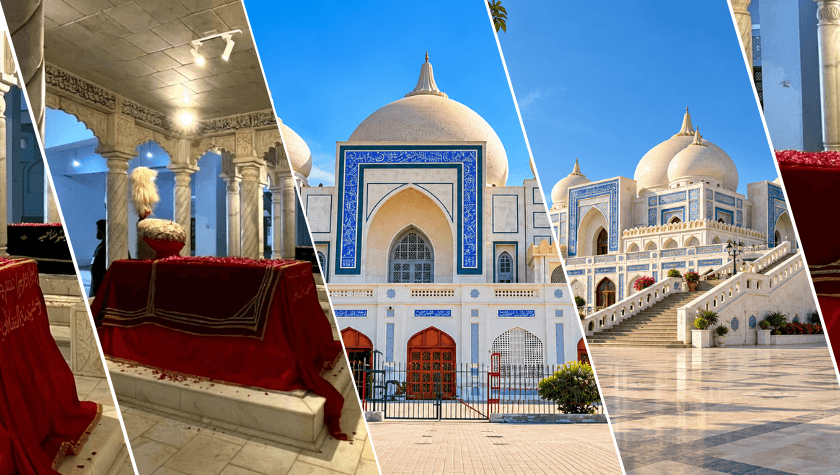
Pakistan is home to remarkable historical monuments, but few carry the same political, cultural, and emotional significance as the Bhutto Family Mausoleum. Located in Garhi Khuda Bakhsh, near Larkana in Sindh, this magnificent white-marble structure is the final resting place of some of Pakistan's most influential political figures.
Surrounded by the rural landscape of Sindh, the mausoleum attracts history enthusiasts, architecture lovers, political supporters, and travellers interested in Pakistan's modern heritage. Its impressive domes, intricate tilework, and peaceful surroundings create an unforgettable atmosphere.
More than a burial site, the mausoleum represents generations of political leadership, national tragedy, and public remembrance.
Whether you are planning a cultural journey through Sindh or exploring the country's important landmarks, this guide covers the history, architecture, location, visiting experience, and travel tips for the Bhutto Family Mausoleum.
Where Is the Bhutto Family Mausoleum Located?
The Bhutto Family Mausoleum is located in Garhi Khuda Bakhsh village, Ratodero Taluka, Larkana District, Sindh, Pakistan, near the town of Naudero.
Garhi Khuda Bakhsh is the ancestral burial ground of the Bhutto family and holds a special place in Pakistan's political history. The village has become a destination for visitors wishing to understand the family's legacy.
Quick Facts About the Bhutto Family Mausoleum
Official name: Bhutto Family Mausoleum
Location: Garhi Khuda Bakhsh, Sindh
Nearest major city: Larkana
Architectural style: Islamic architecture with regional influences
Main construction material: White marble
Construction began in 1993
Famous burials: Zulfikar Ali Bhutto and Benazir Bhutto
Main attraction: Family tombs, domes, and decorative architecture
Best visiting season: November to February
The monument is recognized as a notable heritage attraction by the Sindh Tourism Development Corporation.
History of the Bhutto Family Mausoleum
The history of the Bhutto Family Mausoleum is closely connected to the political development of Pakistan. The Bhutto family has played a significant role in the country's leadership, particularly through former prime ministers Zulfikar Ali Bhutto and Benazir Bhutto.
The family's ancestral village, Garhi Khuda Bakhsh, became nationally prominent after the burial of Zulfikar Ali Bhutto in 1979.
Zulfikar Ali Bhutto: A Prominent Political Leader
Zulfikar Ali Bhutto was the founder of the Pakistan People’s Party (PPP) and served as Pakistan's president from 1971 to 1973 and prime minister from 1973 to 1977.
His government introduced significant constitutional and political changes, including the 1973 Constitution. His leadership remains influential and contested in Pakistan's political history.
Following a controversial murder trial, Bhutto was executed on April 4, 1979, during General Zia-ul-Haq's military government. He was buried in his ancestral graveyard at Garhi Khuda Bakhsh.
His grave subsequently became a place of remembrance for supporters and visitors.
Benazir Bhutto: Pakistan's First Female Prime Minister
Benazir Bhutto, Zulfikar Ali Bhutto's daughter, became the first woman to lead a democratically elected government in a Muslim-majority country in 1988.
She served two terms as Pakistan's prime minister, from 1988 to 1990 and again from 1993 to 1996.
On December 27, 2007, Benazir Bhutto was assassinated following a political rally in Rawalpindi. Her death shocked Pakistan and drew international attention.
She was buried beside her father in Garhi Khuda Bakhsh, transforming the mausoleum into an even more significant national memorial.
Architecture of the Bhutto Family Mausoleum
One of the main reasons tourists visit the Bhutto Mausoleum in Sindh is its remarkable architectural design.
The monument combines traditional Islamic architectural elements with decorative influences associated with Sindhi craftsmanship.
White Marble and Majestic Domes
The mausoleum's white-marble exterior gives it a majestic appearance, particularly under Sindh's bright sunlight.
Its most recognizable architectural features include:
A prominent central dome accompanied by smaller domes.
Grand pointed arches and decorative entrances.
Blue tilework contrasting with the white marble.
Geometric patterns and calligraphic ornamentation.
A spacious courtyard accommodating large gatherings.
The architecture creates a striking visual landmark against the surrounding agricultural plains.
Islamic and Sindhi Artistic Influences
Construction began in 1993, with an early design associated with architect Zaigham Jaffery. A revised design by architect Waqar Akbar Rizvi was introduced in 2003.
The project incorporates features inspired by Islamic monuments, including domes, monumental entrances, calligraphy, and decorative tiles influenced by Sindh's traditional Hala craftsmanship.
Who Is Buried in the Bhutto Family Mausoleum?
The mausoleum serves as the final resting place of several members of the Bhutto family.
Among the most prominent are:
Family member
Zulfikar Ali Bhutto: Former president and prime minister of Pakistan
Benazir Bhutto: Former prime minister and pioneering female political leader
Nusrat Bhutto: Former first lady and prominent PPP leader
Murtaza Bhutto: Politician and son of Zulfikar Ali Bhutto
Shahnawaz Bhutto: Son of Zulfikar Ali Bhutto
Other members of the extended family are also buried within the ancestral burial complex.
For many visitors, seeing these graves provides an opportunity to reflect on important events in Pakistan's modern political history.
Why Is the Bhutto Family Mausoleum Famous?
The Bhutto Family Mausoleum is famous for its association with two former prime ministers, its distinctive architecture, and its role as a gathering place for political remembrance.
Its importance extends beyond tourism.
A Symbol of Political Legacy
The mausoleum represents the enduring public influence of the Bhutto family, particularly among supporters of the Pakistan People’s Party.
Political commemorations, prayers, and remembrance ceremonies regularly bring visitors to Garhi Khuda Bakhsh.
Annual Commemorative Gatherings
Two particularly significant dates are:
April 4: The death anniversary of Zulfikar Ali Bhutto.
December 27: The death anniversary of Benazir Bhutto.
Large gatherings take place around these anniversaries, frequently involving political speeches, prayers, and memorial activities.
Best Time to Visit the Bhutto Family Mausoleum
The best time to visit the Bhutto Family Mausoleum in Pakistan is generally between November and February.
Season
November–February: Generally, the most comfortable
March–April: Warmer; mornings are preferable
May–September: Very hot; minimize outdoor exposure
October: Improving weather, especially later in the month
Early mornings are excellent for exploring the exterior architecture and taking photographs.
Visitors planning trips during political commemorations should anticipate crowds and additional security arrangements.
How to Reach the Bhutto Family Mausoleum
The mausoleum is accessible by road through the Larkana, Naudero, and Ratodero area.
Travelling from Larkana
Larkana is the most practical starting point for many travellers.
Visitors can arrange a private vehicle or local taxi to Garhi Khuda Bakhsh. Depending on the route, traffic, and road conditions, the journey generally takes less than an hour.
Hiring a local driver familiar with the area can simplify transportation.
Travelling from Sukkur or Karachi
Travelers arriving from Sukkur can continue toward Larkana by road before proceeding to the mausoleum.
Those coming from Karachi should plan a longer journey through interior Sindh. An overnight stay in Larkana may be more comfortable than attempting an extended round trip.
Always confirm road conditions, transport availability, and travel arrangements before departure.
What to Expect During Your Visit
Visiting the Bhutto Family Mausoleum offers a combination of architecture, history, and cultural observation.
Explore the Monument's Exterior
Start by observing the white domes, decorative archways, and detailed tile patterns.
The courtyard provides excellent vantage points for appreciating the building's symmetry and overall design.
Pay Respect at the Family Graves
Visitors may enter permitted areas to pay respects and offer prayers.
Because the mausoleum remains an active memorial, respectful conduct is essential.
Dress modestly, speak quietly near the graves, and follow any instructions provided by the staff or security personnel.
Photography and Visitor Etiquette
Photography may be permitted in certain areas, but restrictions can change depending on security arrangements or commemorative activities.
Request permission before photographing people, religious activities, or restricted spaces.
Allow approximately 45–90 minutes for an ordinary visit, depending on access, crowd levels, and your interest in the architecture.
Nearby Attractions to Explore
A visit to Garhi Khuda Bakhsh can form part of a broader Sindh heritage tourism itinerary.
Mohenjo-daro Archaeological Site
One of the region's most important attractions is Mohenjo-daro, an ancient Indus Valley Civilization settlement.
Located approximately 28 kilometres from Larkana, Mohenjo-daro is internationally recognized for its early urban planning, brick structures, and sophisticated drainage systems.
The archaeological site has been inscribed on the UNESCO World Heritage List since 1980.
UNESCO World Heritage Centre
Combining Mohenjo-daro with the Bhutto Mausoleum offers a fascinating journey through thousands of years of Sindh's history.
Explore Larkana's Local Culture
Larkana also offers opportunities to experience regional markets, traditional Sindhi food, and everyday life in upper Sindh.
Visitors can explore local shopping areas and try dishes associated with Sindhi cuisine.
For travellers interested in cultural experiences, these activities complement the region's historical landmarks.
Essential Travel Tips for Visitors
Before visiting the Bhutto Family Mausoleum, consider these recommendations:
Confirm access: Check current opening arrangements and security restrictions locally.
Carry drinking water: Sindh can be extremely hot, particularly during summer.
Dress respectfully: Modest clothing is appropriate for a burial site.
Arrange transport: A private vehicle is often the easiest option.
Avoid major crowds: Choose ordinary weekdays for a quieter visit when possible.
Carry identification: Security personnel may request identification.
Protect the surroundings: Avoid littering or damaging decorative surfaces.
Entrance charges and official visiting hours should be verified before traveling, as reliable current schedules are not consistently published.
Cultural and Historical Importance of the Mausoleum
The mausoleum occupies a distinctive place in Pakistan's cultural heritage because it connects political history with collective remembrance.
It is both a family burial complex and a public space where visitors encounter differing interpretations of Pakistan's political past.
Supporters of the Bhutto family often regard the site as a symbol of sacrifice and democratic struggle. Others may approach it primarily as a historical monument associated with influential yet controversial political figures.
Regardless of political perspective, the mausoleum provides insight into the relationship between leadership, public memory, and national identity.
Its architecture also demonstrates how traditional Islamic decorative forms continue to influence contemporary memorial buildings.
For travellers seeking to understand Pakistan beyond conventional sightseeing, Garhi Khuda Bakhsh offers an especially meaningful destination.
FAQs About the Bhutto Family Mausoleum
Is the Bhutto Family Mausoleum a religious shrine?
The mausoleum is primarily a family burial complex and political memorial. Although visitors may offer prayers, it is not traditionally categorized as the shrine of a Sufi saint.
Is the mausoleum the original Bhutto family graveyard?
Yes. Garhi Khuda Bakhsh served as the ancestral burial ground of the Bhutto family before the construction of the present monumental complex.
Can tourists visit during political anniversaries?
Visits may be possible, but major anniversaries draw large crowds and require additional security measures. Access can be restricted, so confirm arrangements in advance.
Is the Bhutto Family Mausoleum a UNESCO World Heritage Site?
No. The mausoleum is not a UNESCO World Heritage Site. However, nearby Mohenjo-daro holds UNESCO World Heritage status.
Can visitors combine the mausoleum with Mohenjo-daro in one day?
Yes. With an early departure, reliable transport, and enough time for the archaeological ruins, visitors can combine both attractions into a day trip from Larkana.
Conclusion
The Bhutto Family Mausoleum in Garhi Khuda Bakhsh is more than an architectural landmark. It is a place where Pakistan's political history, cultural identity, and traditions of remembrance come together.
From its impressive white-marble domes to the graves of Zulfikar Ali Bhutto and Benazir Bhutto, the mausoleum offers visitors a deeper understanding of influential personalities who shaped the nation's modern history.
For tourists exploring historical places in Sindh, this remarkable destination deserves consideration alongside Mohenjo-daro and the wider cultural attractions of Larkana.
Related Blogs
- 10 Interesting Facts About Pakistan
- Discover Quaid E Azam Residency: A Historical Gem in Ziarat Quetta
- Discover the Enigmatic Thatta: The Ancient City of Pakistan
- Explore the Chaukhandi Tombs: A Famous Historical Site in Karachi
- Mazar E Quaid: A Symbol Of National Unity And Pride
- Mohenjo Daro: Explore the 4500-Year-Old Marvel of Ancient Civilization in Pakistan
- Top 10 Best Places to Visit in Pakistan